
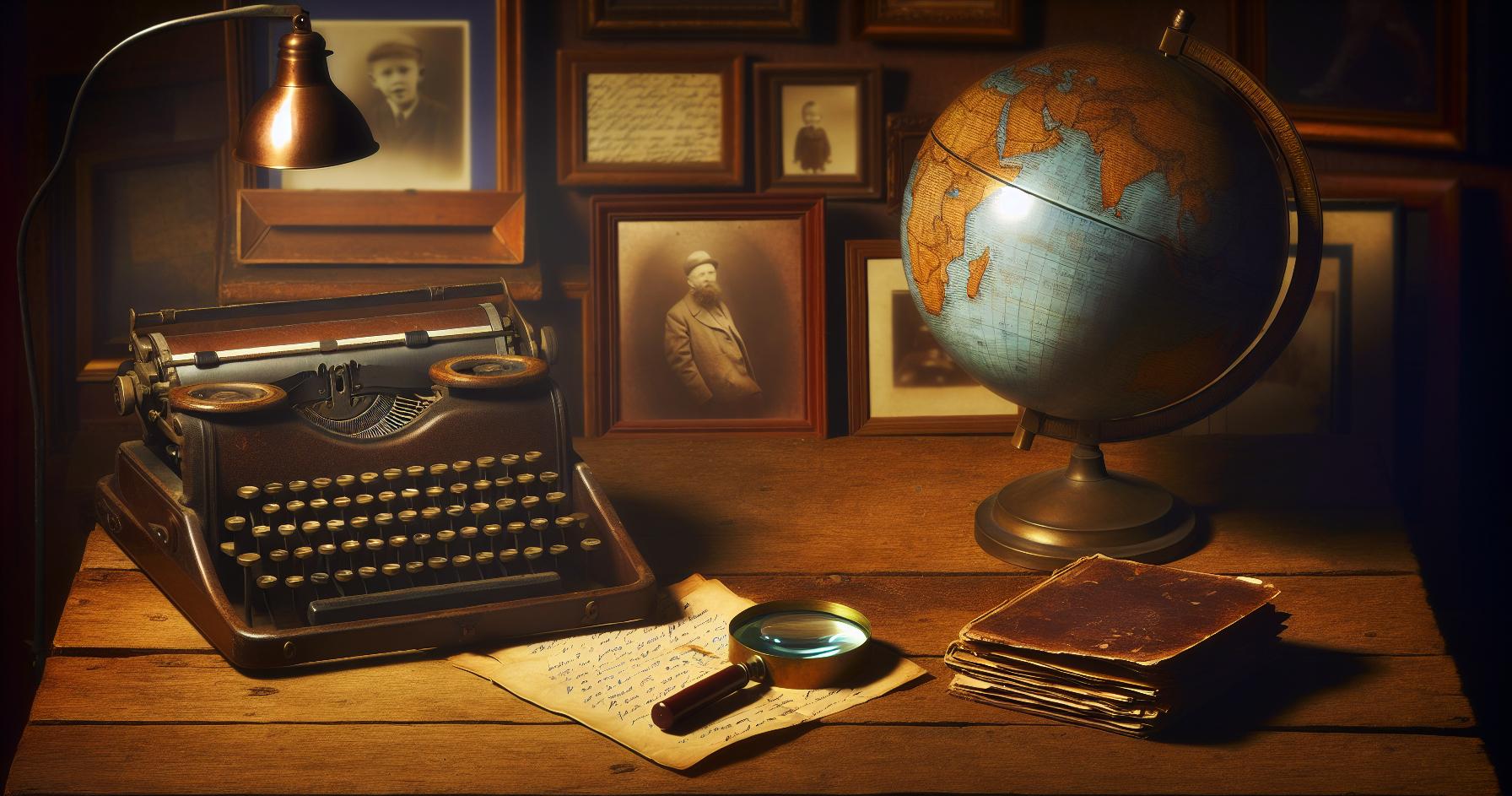
Discovering Your Ancestral Stories: 7 Family History Preservation Tips
Peering into the past to piece together your personal history can be profoundly rewarding. As you embark on this journey of discovery, you'll find that preserving your family's stories isn't just about safeguarding dusty documents and old photographs. It's about actively engaging with your ancestry, using tools and techniques that ensure their tales aren't lost to time.
From selecting the right recording equipment to frame their voices in the best light to crafting questions that open the door to deeper insights, each step offers a unique challenge and opportunity. While this guide outlines seven key tips for capturing and preserving these narratives, there's a crucial aspect of the process that often goes overlooked. Yet, it could very well be the linchpin in connecting with your lineage in a way you've never imagined.
Key Takeaways
Invest in high-quality recording equipment and adjust recording settings to ensure optimal audio quality.
Craft thoughtful and open-ended questions to elicit detailed and engaging narratives.
Practice active listening techniques to build trust and connection with the interviewee and preserve the integrity of the stories.
Share ancestral stories responsibly by obtaining consent, respecting privacy, and safeguarding sensitive information.
Quality Recording Equipment
To ensure your family history interviews are captured with utmost clarity, it's imperative to use high-quality recording equipment that features clear audio capture, noise reduction, and adjustable settings. Begin by selecting devices, such as digital voice recorders or smartphones equipped with reliable microphones, that promise to deliver recordings free from distracting background noises. This precision in capturing clear audio isn't just about investing in the right tools; it's about guaranteeing that every word, every nuance, and every emotion in the stories told is preserved with fidelity.
Moreover, the ability to adjust recording settings is crucial. It ensures that whether you're in a serene park or a cozy living room, the equipment adapts to maintain audio quality. This adaptability means you can focus on the content of the interview—asking open-ended questions and being ready to ask follow-up questions—without worrying about external disturbances.
Choosing a quiet, distraction-free space complements your quality recording equipment, setting a foundation for a successful interview. The goal is to create an environment where your ancestors' stories can flow freely, ensuring that the essence of their experiences is captured for future generations.
Order Digital Conversion Today
ORDER TODAYIdeal Interview Settings
Having selected high-quality recording equipment that ensures clarity and reduces background noise, it's equally important to consider the setting where your family history interviews will take place. The right environment isn't just a backdrop; it's a catalyst that can significantly influence the depth and authenticity of the oral history you're aiming to capture.
Here are key elements to ensure an ideal interview setting:
Choose a quiet, distraction-free space where both you and the interviewee can focus solely on the task at hand.
Ensure that the environment feels comfortable and relaxed, fostering an atmosphere where personal stories flow more freely.
A comfortable setting enhances the authenticity and depth of the narratives shared, making the oral history richer.
Before answering your questions, test and adjust your recording settings, ensuring that the technical side supports the emotional depth of the conversation.
Recording Setup Adjustments
Before you begin recording your family history interviews, it's crucial to select the right equipment and ensure it meets the project's demands.
You'll need to configure your environment optimally to combat any potential audio issues, focusing on minimizing background noise and reverberation.
Lastly, enhancing audio quality through careful adjustments of your recording settings, such as microphone sensitivity and volume levels, will guarantee the clarity and precision of your captured memories.
Choosing the Right Equipment
Ensuring your recording equipment is correctly set up is a crucial step in capturing high-quality audio for preserving family histories. Here's how you can adjust your setup for clarity and precision:
-
Test and adjust recording settings before the conversation begins to ensure you're ready to capture every story.
-
Check microphone sensitivity to record clear voices without any distortion, making every detail in your family history book crystal clear.
-
Adjust volume levels to prevent clipping or distortion from louder voices, preserving the integrity of your genealogy records.
-
Conduct a quick test recording to identify and rectify any issues, ensuring the audio quality matches the importance of your family tree.
-
Make necessary adjustments for optimal audio quality, guaranteeing every word adds value to your mission to preserve family stories.
Optimal Environment Configuration
Configuring the optimal environment for recording family histories involves adjusting your setup to mitigate background noise and enhance voice clarity. Before diving into the heart of your session, test and tweak your recording settings.
Ensure the microphone sensitivity is fine-tuned to capture your loved ones' voices clearly, without any distortion. Adjust the volume levels to prevent any clipping or distortion that loud voices might cause. Conduct a quick test recording; listen carefully and make the necessary adjustments to guarantee optimal audio quality.
This meticulous, analytical approach ensures that every word of your family members' responses to your Questions About Family is captured with clarity. By creating a comfortable recording environment, you're setting the stage for a free-flowing, genuine exchange of ancestral stories.
Audio Quality Enhancement
To enhance audio quality for recording family histories, opt for high-quality recording devices equipped with advanced microphones and noise-cancellation features. Preserving your family's history through history interviews is vital to keeping your family's legacy alive. Here are some tips to ensure the best audio quality:
Use devices with clear audio capture and noise reduction capabilities.
Adjust recording settings beforehand to suit the environment.
Consider external microphones or headsets for clearer audio during interviews.
Test your setup to ensure optimal audio quality is achieved.
Create a quiet, comfortable setting to minimize background noise.
These adjustments are crucial in ensuring that every word is captured clearly, helping you preserve your family's legacy with the highest fidelity.
External Audio Solutions

When preserving family history through interviews, selecting high-quality recording devices is crucial for capturing clear and precise audio. Imagine embarking on a journey similar to Henry Louis Gates' 'Finding Your Roots,' where every nuance of your family story becomes a valuable piece of history. To achieve this, you'll need devices that go beyond mere functionality.
Look for digital voice recorders or smartphones with reliable microphones that promise clear audio capture, integrate noise reduction capabilities and adjustable recording settings. These features are indispensable for ensuring that your interviews are recorded with the clarity and precision that your family's legacy deserves.
Moreover, investing in equipment that maintains audio quality over time allows you to revisit these stories, perhaps even uncovering pieces of census data or anecdotes you initially missed. Remember, the space where you conduct these interviews matters as much as the equipment.
Choosing a quiet, distraction-free environment ensures that your recordings are free from background noise, making every word spoken by your relatives as clear as if they were sitting right beside you.
In your quest to preserve your family's history, the right external audio solutions are your allies. They empower you to capture every story with the respect and fidelity it warrants.
Order Digital Conversion Today
ORDER TODAYCrafting Insightful Questions
Crafting insightful questions demands a meticulous approach, as these queries form the bedrock of compelling and richly detailed oral histories. When delving into your family's past, these questions are your tools to unearth the stories that define your lineage and shape your future.
To ensure that you're extracting the most meaningful information, consider the following strategies:
-
Craft open-ended questions that encourage the sharing of personal stories and memories, enriching the oral history with vibrant details.
-
Prepare context-providing questions to elicit detailed responses, painting a fuller picture of your family's experiences and perspectives.
-
Develop thoughtful and thought-provoking questions to capture engaging narratives that reveal the depth and nuances of your family history .
-
Design questions that evoke emotions and spark memories, forging a deeper connection with the past and bringing more meaningful interviews to life.
-
Research your family background thoroughly and prepare questions that capture the essence of your family's history. This will ensure that the information gathered is significant and relevant to future generations.
Engaging in Active Listening
After formulating insightful questions, it's equally crucial to engage in active listening during interviews to capture the essence of your family's narratives fully. This methodical approach ensures that both older and younger relatives feel genuinely respected and understood. By maintaining eye contact, nodding, and providing verbal cues, you demonstrate an engaging presence that encourages your relatives to open up more freely about their lives.
Avoid interrupting and allow them the freedom to express their thoughts and memories without distractions. This respectful silence is a powerful tool in active listening, granting your relatives the space to share their stories in full.
Reflecting on the information shared by summarizing key points or asking clarifying questions deepens the conversation. It shows that you're not just hearing but truly listening and valuing the rich tapestry of your family history .
Stay present and avoid distractions. Your genuine curiosity and focus on the interviewee's narrative are paramount in preserving the integrity and depth of your family's stories.
| Technique | Impact on Interview |
|---|---|
| Eye Contact | Builds trust and connection |
| Nodding/Verbal Cues | Shows engagement and understanding |
| Avoiding Interruptions | Respect the interviewee's freedom to share |
| Clarifying Questions | Deepens the conversation, ensuring accuracy |
Respecting Interviewee Privacy
As you continue your journey in preserving family history , it's crucial to prioritize maintaining confidentiality agreements.
When sharing stories, you must judiciously decide which details to include, ensuring you respect the privacy of your relatives.
Always secure consent before disseminating any personal anecdotes or information, thereby safeguarding the trust and integrity of your project.
Maintaining Confidentiality Agreements
Establishing and maintaining confidentiality agreements that protect your interviewees' personal and sensitive information is crucial to ensuring their privacy. When you're researching family history , freedom means respecting boundaries.
Here's how:
-
Seek consent before sharing birth and death dates or any personal stories on your family website or an online database.
-
Safeguard sensitive details, especially concerning military records or private family matters, to avoid unwanted exposure.
-
Honor confidentiality requests meticulously; if someone prefers to stay out of the public eye, respect that choice without question.
-
Prioritize protection by regularly reviewing who has access to sensitive information.
-
Educate family members involved in the project about the importance of these agreements to ensure a collective effort to maintain privacy.
Protecting your family's stories starts with respect and careful handling of each piece of information.
Sharing Stories Responsibly
Building on the foundation of maintaining confidentiality agreements, sharing stories responsibly demands a keen awareness of the interviewee's privacy and comfort levels. You've got to respect their privacy and get their okay before sharing their tales. Be super careful about touchy subjects, and steer clear from spilling the beans on stuff that could make them uneasy or hurt them.
| Key Action | Purpose | Impact |
|---|---|---|
| Obtain Consent | Preserve legacy | Ensures stories are shared ethically |
| Avoid Sensitive Info | Protect comfort | Maintains trust and respect |
| Use Pseudonyms | Secure identity | Safeguards personal details |
Always prioritize the interviewee's comfort and privacy when sharing their stories. This approach not only honors their legacy but also responsibly preserves precious information for future generations, ensuring that the freedom to share comes with a deep sense of responsibility.
Frequently Asked Questions
How Can You Preserve Your Own Family History?
To preserve your family history , meticulously gather oral histories, create detailed photo albums, ensure digital backups for safety, and focus on heirloom preservation. This methodical approach safeguards your ancestors' legacies for future generations' freedom to explore.
How Do I Find My Ancestors in Family History?
To find your ancestors, start with genealogy websites, DNA testing, and digging into historical records. Don't overlook oral traditions; they're key. This methodical approach gives you the freedom to piece together your family's past.
How Do You Preserve Your Family Legacy?
To preserve your family legacy, consider digital archiving for photos, heirloom conservation, and recording oral traditions. Undertake legacy projects methodically, ensuring every detail enriches your family's story and offers future generations a sense of freedom and belonging.
How Do I Document My Family History?
To document your family history , you'll want to interview relatives, organize photographs, and create digital archives. Record stories meticulously, ensuring every detail is captured. This methodical approach guarantees your ancestors' legacies aren't just preserved but celebrated.
Order Digital Conversion Today
ORDER TODAYDiscovering Your Ancestral Stories Final Thoughts
Now, you've got the tools to unlock the vault of your family's history, but remember, the journey's just beginning. Each step, from choosing the right recording equipment to crafting those insightful questions, demands your meticulous care.
As you delve deeper, listening keenly and respecting privacy, you're not just preserving stories; you're weaving the fabric of your ancestry.
What secrets will you uncover? What tales will emerge? The answers lie within your grasp, but only if you're brave enough to seek them.