
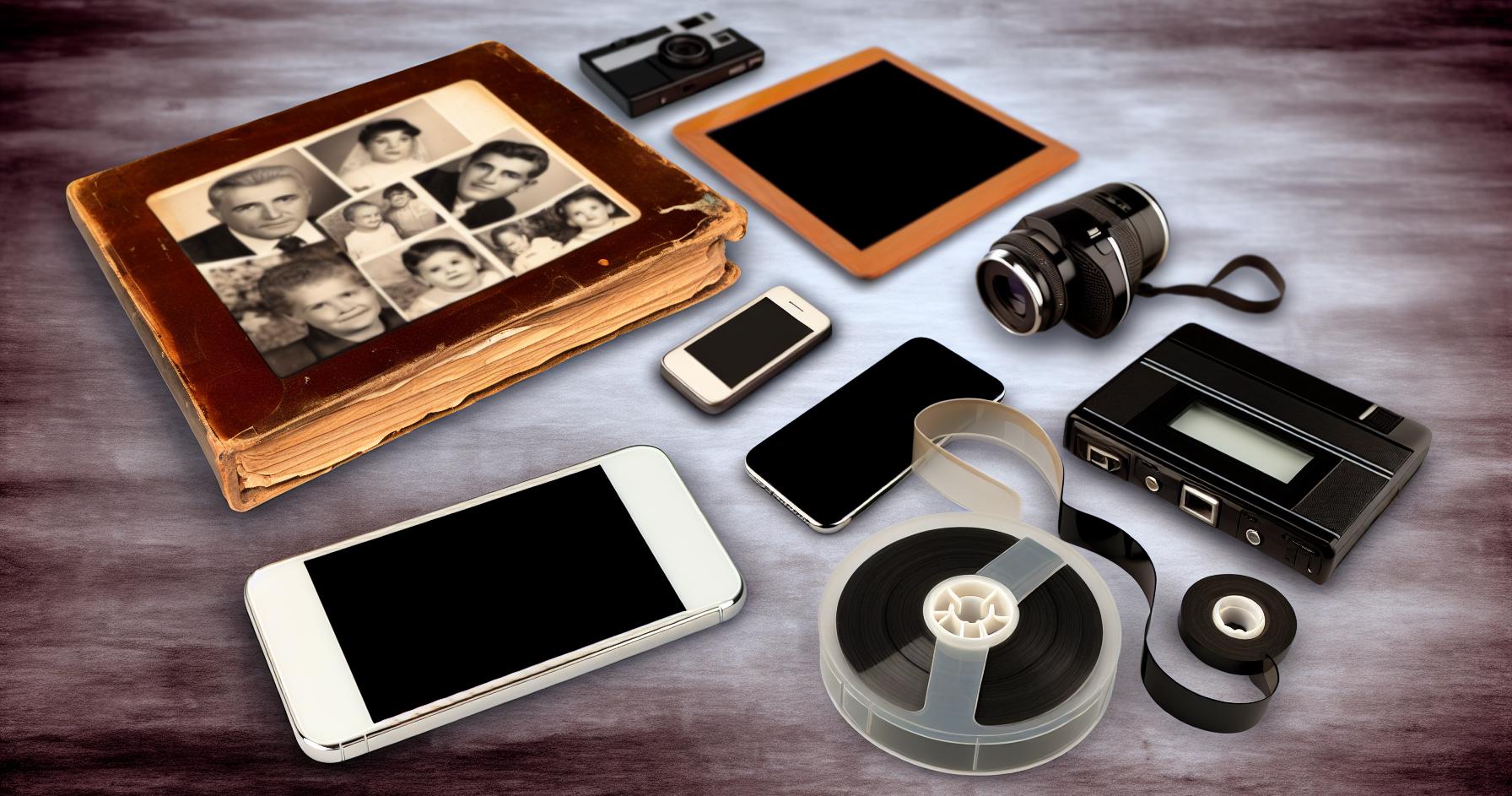
The Revolutionary Journey of Videotape for Family Heritage
You might think that the story of videotape's rise merely charts the evolution of technology, but it's actually a pivotal chapter in how we preserve our family heritage.
Starting with Bing Crosby's quest for better broadcasting quality in the 1950s, this journey isn't just about technological milestones; it's about how these developments have enabled us to capture, share, and preserve our personal histories in ways that were unimaginable to previous generations.
As you explore the transformation from magnetic tape to digital restoration, consider how these advancements have not only safeguarded our collective narratives but also shaped the very fabric of family memory itself.
The question now is, how will the future of heritage videography continue to influence our connection to the past?
Key Takeaways
Bing Crosby's use of a tape recorder in the 1950s led to the development of the home video recorder.
The Video Home System (VHS) democratized video recording.
Video restoration techniques enhance old recordings and preserve our collective memory bank.
Preservation and digitization of videotape ensure the longevity, quality, and accessibility of family heritage for future generations.
The Audio-Visual Evolution
The shift from Bing Crosby's pioneering work with magnetic tape to the advent of digital video restoration marks a pivotal chapter in the audio-visual evolution. It offers a detailed examination of technological advancements that have significantly enhanced the quality and accessibility of recorded history.
Crosby's innovative use of the tape recorder in the early 1950s, initially aimed at giving him the freedom to pre-record his radio shows with superior sound quality, inadvertently set the stage for the development of the home video recorder. This leap forward made it possible for individuals to capture, store, and relive personal and historical moments, a liberty previously unimagined.
The evolution didn't halt there. The introduction of the Video Home System (VHS) democratized video recording, turning it from a luxury into a commonplace tool for preserving family heritage.
Today, digital video restoration techniques breathe new life into old recordings, employing tools that Crosby could hardly have envisioned. Advanced color grading, stabilized image reconstruction, and AI-driven upscaling haven't only preserved but enhanced the stories and triumphs of the past.
This journey from magnetic tape to digital restoration encapsulates a relentless pursuit of freedom in how we capture, store, and revisit our collective histories.
Order Digital Conversion Today
ORDER TODAYBing Crosby's Magnetic Breakthrough
Building on the audio-visual evolution, Bing Crosby's magnetic breakthrough fundamentally altered the landscape of recorded entertainment, introducing the first practical video recorder for pre-recording shows. Crosby's desire for video recording stemmed from his success with magnetic tape on radio and the limitations of live broadcasts. His venture, Bing Crosby Enterprises (BCE), capitalized on this innovative spirit, seeking freedom from the constraints of live performances.
Crosby's use of magnetic tape and the development of the video recorder revolutionized the recording industry by allowing artists to pre-record content, enhancing creative freedom and scheduling flexibility. They also laid the groundwork for technological advancements in video recording.
Crosby's vision of prerecorded shows, pioneering a new era in broadcast entertainment, drove Crosby's collaboration with Ampex to build the first practical video recorder. This collaboration demonstrated a successful application of magnetic tape for video, setting a precedent for future innovations.
This breakthrough not only paved the way for the future of recorded entertainment but also underscored the significant role of artists in technological advancement. Crosby's foresight and determination to overcome the limitations of live broadcasts have left an indelible mark on the recording industry, inspiring generations to pursue freedom in content creation.
Videotape Technology Milestones
From Bing Crosby's pioneering efforts emerged a series of milestones in videotape technology that have reshaped our understanding and preservation of family heritage. Crosby's transition from radio to videotape, fueled by his success with magnetic tape, marked the inception of the first practical video recorder (VCR ).
This breakthrough signaled a seismic shift, liberating creators and families alike by offering unprecedented control over recording and playback.
The development of the VCR wasn't merely a technical achievement; it was a harbinger of freedom for recorded entertainment. For the first time, individuals could capture, preserve, and revisit their personal histories with ease. This technological leap granted families the liberty to document their narratives, ensuring that their legacies weren't confined to memory alone but could be visually and audibly relieved.
Moreover, the evolution of video restoration techniques, transitioning from analog to digital, has further empowered us to reclaim and celebrate our past. Advanced digital methods, harnessing AI, algorithms, and automation, breathe new life into historical footage, thus safeguarding our collective heritage.
The milestones in videotape technology, initiated by Crosby's vision, have thus paved the way for a future where every moment can be eternally preserved and cherished.
Preserving Family Memories
In an era where technology continually reshapes our interaction with the past, video restoration emerges as a pivotal tool in preserving family memories, ensuring that every frame serves as a bridge to bygone times. This process not only breathes life into old footage but also captures the essence of eras long passed, reawakening memories that time might've dulled.
Modern advancements in video restoration offer an invaluable service in safeguarding our collective memory bank. With the help of digital methods and AI-driven upscaling, enhancing precision in repairing damaged footage, and ensuring visual consistency across various formats, challenges such as deteriorating film materials and the balance between retaining originality and preventing further deterioration are met with sophisticated solutions. Opting for professional video restoration services over DIY methods ensures the longevity, quality, and authenticity of your home videos. This choice not only utilizes state-of-the-art technology but also adheres to ethical preservation practices, crucial for preserving family memories in their most authentic form and safeguarding historical footage that offers a window into the moments shaping our present.
Thus, videotape restoration stands as a guardian of heritage, ensuring that the legacy encoded in these visuals remains accessible and vibrant for future generations.
The Future of Heritage Videography
The future of heritage videography, propelled by advancements in digital restoration and AI-driven upscaling, promises an era where historical narratives aren't only preserved but vividly enhanced for generations to come. This evolution, grounded in the meticulous application of new technology, ensures that the stories and triumphs of our ancestors continue to inspire.
Leveraging digital video techniques, video restoration has become a vital conduit for offering a window into moments that have shaped our present and contributed to humanity's collective narrative. Advancements in restoration techniques, including increasingly sophisticated algorithms, cloud-based services, and machine learning predictions for potential decay, herald a future where the integrity of historical footage is impeccably maintained.
Opting for professional video restoration services, as opposed to DIY methods, guarantees longevity, quality, and authenticity. Such expertise far surpasses the capabilities of most consumer-level restoration software, embodying an investment in emotional preservation as much as technical rehabilitation.
The future of heritage videography isn't just about technical fixes; it's an emotional journey toward preserving cherished memories. It unlocks the boundless potential to preserve and revive timeless storytelling, ensuring that our shared history is vividly remembered and celebrated.
Frequently Asked Questions
How Can Individuals Differentiate Between the Various Formats of Videotapes That They Might Find in Their Family Archives, Such as VHS, Betamax, and 8mm?
Focus on format identification through visual inspection in your archives to differentiate videotape formats like VHS, Betamax, and 8mm. Look at the tape's size and the magnetic stripe's layout for clues on its specific format.
What Are Some Uncommon but Effective Methods for Repairing Damaged Videotapes That Contain Irreplaceable Family Memories?
To salvage your treasured memories, consider magnetic alignment for distorted images, splice repair for physical breaks, and cassette shell replacement for damaged cases. These techniques demand precision, offering a path to freedom from the fear of loss.
How Does the Environmental Climate or Storage Conditions Affect the Longevity and Playback Quality of Old Videotapes?
Environmental conditions significantly affect your old videotapes . Magnetic degradation, humidity impact, and temperature extremes can deteriorate their quality and longevity, making careful storage crucial to effectively preserving these irreplaceable memories.
What Legal Considerations Should Be Taken Into Account When Digitizing or Sharing Old Family Videotapes Online, Especially Those That Include Content From Televised Broadcasts or Copyrighted Material?
Before you digitize those old family tapes, pause. You're navigating a minefield of copyright laws, privacy concerns, and digital rights. Tread carefully to ensure freedom doesn't become entangled in legal woes.
Are There Any Cultural Implications or Noticeable Trends in the Content of Family Videotapes Across Different Regions or Periods That Researchers Have Identified that Wouldn't Typically Be Preserved Through Other Forms of Family Heritage Documentation?
Researchers have identified that family videotapes reveal unique cultural preservation, showcasing generational storytelling and regional rituals not found in other records. You'll notice distinct trends reflecting diverse heritage, enriching our understanding of cultural continuity and change.
Order Digital Conversion Today
ORDER TODAYJourney of Videotape for Family Heritage Final Thoughts
In conclusion, the odyssey of videotape from Bing Crosby's magnetic epiphany to the digital age has been a bridge over time, connecting generations.
This technological tapestry has woven a rich fabric of family heritage, capturing fleeting moments for eternity. As we advance, the preservation and restoration of these visual chronicles become paramount, ensuring our collective narrative endures.
Videography's future, steeped in innovation, promises to democratize memory-keeping further, making every individual a custodian of history.