
What Are the Best Ways to Preserve Family Memories With Videotape Technology
As the adage goes, 'A picture is worth a thousand words.' Still, when it comes to preserving family memories, videotape technology can encapsulate not just words but emotions, voices, and moments that are irreplaceable.
You're tasked with the important job of safeguarding these treasures, and it's crucial to start the preservation process sooner rather than later. From converting your old tapes to digital formats to finding the right storage solutions, the journey is both technical and emotional.
You'll need to navigate the complexities of transferring your tapes without losing precious data and discover ways to share these moments with future generations. But how do you ensure that these memories withstand the test of time, especially when technology is constantly evolving?
Stick around as we explore the best practices for preserving your family's history through videotape technology, ensuring that your cherished moments are accessible for years to come.
Key Takeaways
-
Converting videotapes to digital formats ensures longevity and accessibility.
-
Proper storage practices, such as keeping tapes in a cool, dry, and dark environment, help minimize degradation.
-
Repairing damaged videotapes using appropriate techniques is essential for preserving their longevity.
-
Utilizing dedicated scanners or smartphones to digitize tapes and setting up a robust backup system ensures the preservation of family memories.
Understanding Videotape Technology
To fully appreciate the nuances of preserving family memories, it's essential to understand that videotape technology captures audio and video data on magnetic tape using various formats such as VHS, Betamax, and MiniDV. This method, employing a video camera, intricately encodes your cherished moments onto a physical medium. Each format, from the widespread VHS to the compact MiniDV, offers unique characteristics in terms of quality, capacity, and longevity.
Diving deeper, you'll find that the battle between analog formats like VHS and digital ones such as MiniDV is pivotal. Analog tapes, while once revolutionary, suffer more from degradation over time, risking the clarity of your audio and video. Digital formats, in contrast, boast a resilience to quality loss over time, safeguarding your memories against the ravages of decay.
However, regardless of the format, all videotapes are prone to deterioration. Factors such as humidity, temperature, and even the magnetic fields around them can erode the quality of the audio and video they hold.
That's why understanding the technicalities of videotape technology isn't just about nostalgia; it's a crucial step in ensuring your family's legacy remains vivid and intact, granting you the freedom to relive those moments exactly as they were.
Order Digital Conversion Today
ORDER TODAYTransferring Videotapes to Digital
Understanding the intricacies of videotape technology underscores the importance of converting your cherished videotapes to digital formats to ensure their longevity and accessibility. You've got the freedom to liberate those memories from their physical confines and make them easily shareable and safe. Here's how you can digitize old tapes and breathe new life into them:
| Method | Benefit |
|---|---|
| Dedicated Video Transfer Service | Hassle-free, professional quality |
| Video Capture Device or Converter | Control over the process, potential cost savings |
| Organizing and Labeling Digital Files | Easy access and sharing |
| Storing on Multiple Platforms | Security through backup copies |
| Enhancing Video Quality | Improved viewing experience, preserved memories |
Investing in a quality video capture device lets you take charge of converting your tapes. You'll need to organize and label the digital versions thoughtfully, making sure they're easily navigable by date, event, or family member. Don't forget to store these treasures on various platforms, including external hard drives, cloud storage, and DVDs. If possible, enhancing the quality during the transfer can significantly improve your viewing experience, ensuring that these digital versions stand the test of time.
Proper Storage Practices
Once you've digitized your cherished videotapes, it's crucial to store the original media properly to ensure their preservation. Proper storage practices play a pivotal role in safeguarding your video memories against deterioration, ensuring they remain accessible for future generations to cherish.
First, find a cool, dry, and dark environment for your videotapes. Excessive heat, humidity, and light are detrimental and accelerate the degradation process. This careful selection of storage location significantly minimizes the risk of damage over time.
Moreover, keep your videotapes away from magnetic fields and electronic devices. Such exposure can lead to data loss, distorting the precious content captured in your videos. Ensuring a safe distance from these potential hazards is key.
For optimal preservation, store your videotapes vertically. This position prevents warping, a common issue that can render tapes unplayable. It's a simple yet effective way to ensure longevity.
Invest in archival-quality storage containers and sleeves. These specialized products offer protection against dust and moisture, two common culprits of deterioration. They're a worthy investment for safeguarding your memories.
Lastly, having digital copies serves as a backup for long-term preservation. It's a smart strategy that complements proper storage practices and keeps your video memories alive and intact for years to come.
Repairing Damaged Videotapes
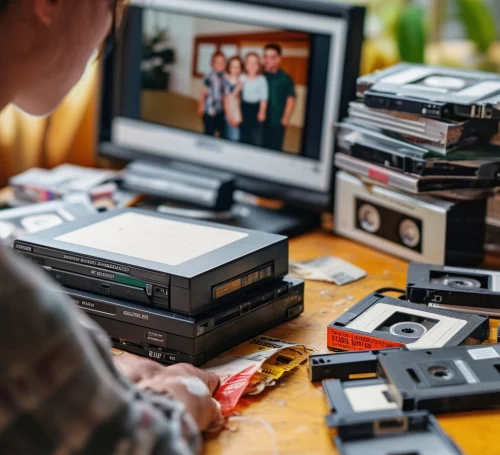
While proper storage practices are essential for preserving your video memories, it's equally important to know how to repair damaged videotapes to ensure their longevity.
First, assess the damage to your videotape. You'll need to identify the specific issues, whether it's a broken casing or a cracked tape, to address them effectively.
If you're dealing with physical damage, such as a shattered casing, it's crucial to replace or repair it to prevent further deterioration. For cracked or broken tape, you'll need a splicing block and splicing tape. This specialized equipment allows you to mend damaged sections meticulously, ensuring your family heirlooms are restored to their former glory.
After repairing, wind the tape back onto its spools carefully. It's vital to align the tape properly to avoid further damage. This step is as crucial as fixing the tape itself, as improper alignment can lead to playback issues or additional harm.
Sharing and Archiving Digitally
To safeguard your family's memories for future generations, it's essential to embrace digital sharing and archiving techniques, utilizing tools like dedicated scanners or smartphones for effective digitization. The process not only preserves these precious moments but also makes them more accessible, allowing you to share them freely with loved ones.
Digital Preservation Techniques:
Utilize dedicated scanners, all-in-one printers, or even your smartphone to digitize tapes, photos, and documents.
Transfer your digitized files to current formats and storage media to prevent obsolescence. Formats such as MP4 for videos and JPEG for images are widely compatible and ensure longevity.
Set up a robust backup system, ensuring that copies are stored in at least three different places. This could include:
External hard drives
Cloud Storage Services
Archival quality DVDs
Sharing your digitized collection with family members not only deepens connections but also spreads the responsibility of preservation. By leveraging cloud storage services, you create a centralized, accessible location for these memories. This approach ensures that your efforts to preserve family memories aren't in vain, safeguarding them against both physical degradation and technological obsolescence. It also grants you and your loved ones the freedom to reminisce and celebrate your shared history anytime, anywhere.
Order Digital Conversion Today
ORDER TODAYFrequently Asked Questions
What Is the Best Way to Record Family History?
To record family history , engage in oral storytelling with elders, and then digitize these tales into digital archives. Also, create memory boxes filled with tangible mementos. This approach ensures your legacy's freedom and preservation.
How Do You Preserve Family Videos?
To safeguard your family's heartbeats captured on tape, dive into digital conversion . Store these treasures in multiple, climate-controlled spaces, ensuring their whispers endure through time, offering a taste of freedom to future generations.
What Is the Best Way to Preserve Family Photos?
To best preserve your family photos, start by scanning them into digital formats. Create digital albums for easy navigation and use cloud storage for safekeeping. This way, you'll ensure their longevity and accessibility.
What Do People Do to Record and Preserve Memories of Their Experiences?
To record and preserve experiences, you'll likely engage in event live streaming, share moments on social media, and craft narratives through digital storytelling. This approach ensures your memories are accessible, shareable, and enduring.
Best Ways to Preserve Family Memories With Videotape Technology
In wrapping up, think of preserving your family memories with videotape technology as safeguarding a delicate tapestry of your heritage. By transferring tapes to digital, you're weaving stronger threads for the future.
Store these treasures properly, repair any damages swiftly, and share your digitized history widely. This ensures your family's stories, laughter, and tears aren't just preserved but are accessible for generations to come.
Embrace this journey; it's a meticulous task but one that enriches your family's legacy immeasurably.