
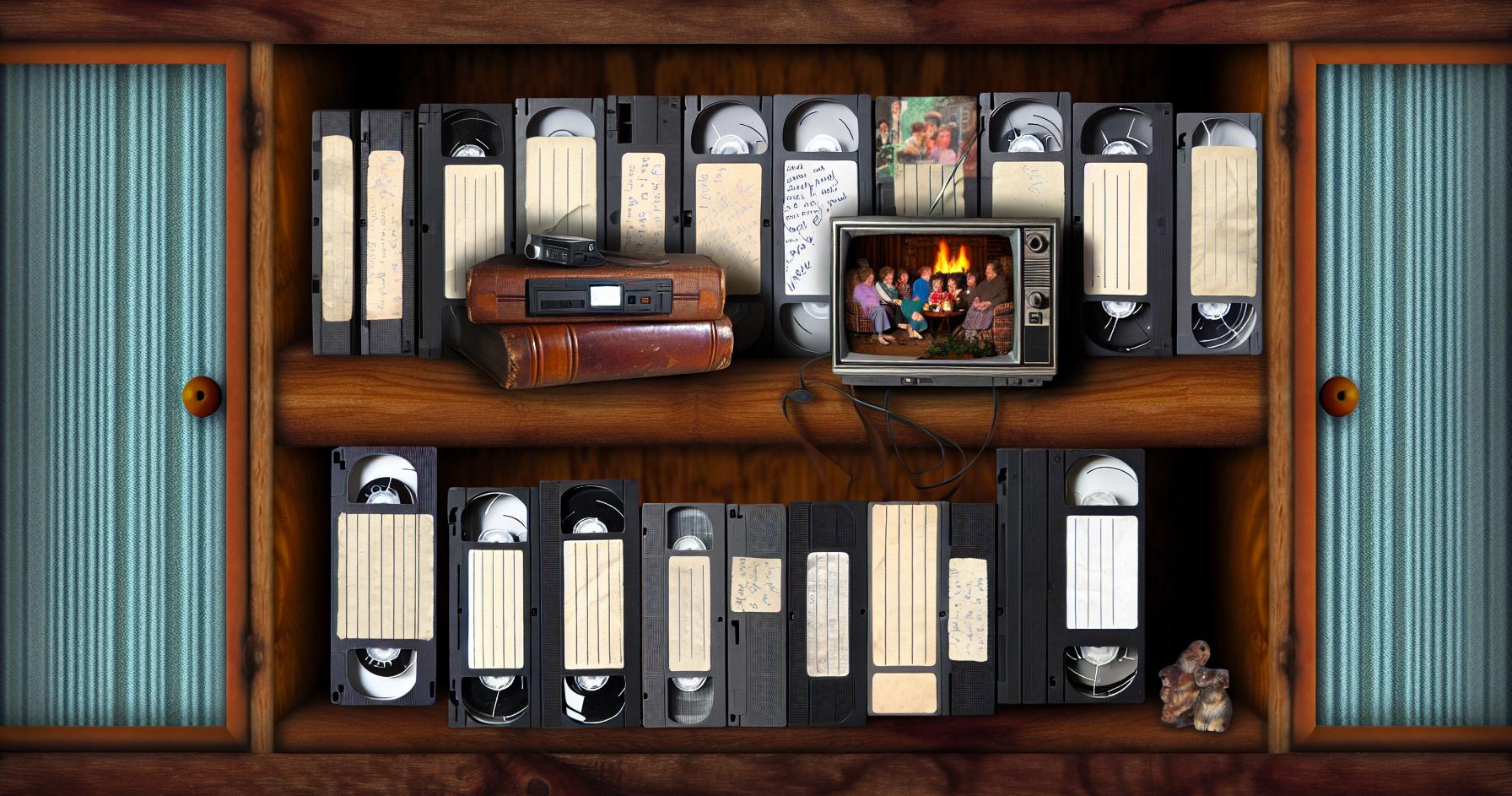
What Role Did Videotape Play in Preserving Family Stories
Consider the 1985 Smith family reunion, captured on a bulky VHS camcorder. Now, it's a treasured artifact showcasing laughter, candid moments, and the youthful faces of relatives who've since aged or passed away. You've likely experienced something similar: sitting in a dimly lit room, watching old family videos that whisk you back to moments frozen in time.
Videotape, in its heyday, wasn't just about recording; it was about preserving a legacy, encapsulating emotions, voices, and events that photographs alone couldn't convey. As you reflect on the impact these recordings have had on your understanding of family history , consider the shift in technology and how it's affected the way we preserve our stories.
The transition from videotape to digital forms of recording has undoubtedly transformed the landscape of memory-keeping, raising questions about accessibility, permanence, and the authenticity of our recollections. Let's explore together how these changes have impacted our connection to the past and our ability to share these stories with future generations.
Key Takeaways
Videotape revolutionized the preservation of family stories.
Videotape captured raw emotions and preserved them as relics of lived experiences.
Videotape offered a more dynamic and comprehensive way to capture family stories compared to photographs.
Technological evolution, such as digitization, has transformed the preservation process and bridged the gap between the past and the future.
The Advent of Videotape
The advent of videotape marked a transformative era in preserving family stories, offering a dynamic medium through which every fleeting moment could be captured and cherished for generations. This innovation wasn't just about technology; it was about freedom—the freedom to document, remember, and share the essence of family history in a way that was previously unimaginable.
Through the lens of a camcorder, you could immortalize the laughter at family gatherings , the proud smiles at graduations, and even the bittersweet tears at farewells.
Videotape empowered you to become the storyteller of your own family saga, weaving together the threads of daily life, traditions, and milestones into a visual tapestry of family history . This wasn't merely about recording events; it was about preserving the nuances of family stories that text or photographs alone couldn't capture—the inflections in a loved one's voice, the subtle dynamics at family dinners, the candid moments of unguarded joy or sorrow.
Order Digital Conversion Today
ORDER TODAYCapturing Raw Emotions
While videotape has revolutionized the preservation of family narratives by capturing the essence of events and traditions, the true heart of our stories lies in the raw emotions expressed during these moments. When you delve into the process of recording your loved ones, focusing on capturing their authentic selves becomes paramount. This authenticity brings a depth to family memories that mere words can't always convey.
To achieve this, it's crucial to set a scene where your loved ones feel comfortable enough to open up. Utilize open-ended questions that prompt them to share, not just recount events. It's in these settings that the magic of capturing raw emotions shines through. Your active listening and engagement encourage them to reveal more of their genuine selves, making the stories richer and more compelling.
Moreover, videotaping allows you to capture not just their words but the nuances of their expressions, the subtle shifts in their body language, and the tones in their voice that convey a spectrum of emotions. These visual and auditory cues add layers to the narrative, making the family memories you preserve not just stories but relics of lived experiences accessible to future generations in their most authentic form.
Videotape Versus Photographs
In comparing videotape to photographs, it's clear that the former offers a more dynamic and comprehensive way to capture the essence of family stories, with their ability to record not just images but also sounds and movements. When you're looking to preserve the rich tapestry of your family's history, consider these points:
-
Immersive Experience: Videotapes envelop you in the moment, letting you hear the laughter, see the tears, and feel the ambiance of family gatherings . Unlike photographs, they don't just capture a snapshot; they preserve the full performance of life.
-
Dynamic Narratives: They chronicle not only the milestones but also the intricate, fleeting moments that photographs might miss. This continuous flow brings the evolution of family stories to life, illustrating how relationships and individuals change over time.
-
Authentic Voices: The power of hearing a loved one's voice, their jokes, or their words of wisdom adds an invaluable layer to preserving family history . Videotapes maintain the nuances of these conversations, ensuring that future generations can connect on a more personal level.
-
Cultural Immersion: Beyond individuals, videotapes capture the environment, showcasing the context in which family stories unfold. This includes the background noises, the décor, and the social norms, offering a comprehensive view of the era.
Videotapes are vital tools for preserving family stories. They provide a multi-sensory journey that photographs alone can't offer. They ensure that future generations inherit a rich, vibrant narrative of their lineage, celebrating not just the image but the spirit of the family.
Technological Evolution Impact

Through the lens of technological evolution, we've seen videotape's role in preserving family stories transform, thanks to digitization and innovative archival methods. Initially, videotape allowed us to capture personal moments and narratives, creating a tangible link to our past. The shift towards digital preservation, however, has revolutionized this process. Now, efforts like those by the XFR Collective highlight the importance of transitioning from physical tapes to digital formats, ensuring that the stories of older relatives aren't lost to time or degradation.
The impact of this technological shift extends beyond mere preservation. Digitization offers unparalleled ease in storing and sharing these precious memories, allowing families to reconnect with their past and with each other in ways previously unimaginable. The creation of family legacy videos, in particular, stands out as a testament to this evolution. By working with video production firms specializing in these legacy projects, families can bring their history to life, crafting visually compelling narratives that resonate across generations.
This evolution from videotape to digital formats demonstrates a broader cultural shift towards valuing and preserving our personal histories. It's a reflection of our desire for freedom – the freedom to access, share, and celebrate the stories that define us, bridging the gap between the past and future.
Archiving and Accessibility Challenges
Facing the challenges of archiving and accessibility head-on, it's clear that the journey from videotape to digital preservation isn't without its obstacles. You're tasked with safeguarding the irreplaceable memories of family members, but the path is fraught with complications. Reflecting on these hurdles, consider the following points:
-
Deterioration of VHS Tapes: The magnetic tapes that house your cherished memories are fading. With a lifespan of just 15 to 20 years, the clock is ticking to save these visual narratives before they're lost to time.
-
Digitization and Preservation Efforts: Turning to digitization offers a lifeline. However, it's not as straightforward as it seems. Every tape must be played in its entirety for digitization, demanding both patience and technical savvy.
-
Challenges and Alternatives in Digital Preservation: Even once digitized, the battle isn't over. Digital files require constant upkeep, and some argue that returning to more durable film storage could save money and ensure longevity.
-
Collaborative Preservation with XFR Collective: By joining forces with groups like the XFR Collective, you tap into a community dedicated to solving these technical challenges. Their focus on saving videos from marginalized communities showcases the power of collaborative effort in preserving history.
As you navigate these archiving and accessibility challenges, it's evident that the quest to preserve family stories is both a labor of love and a critical race against time.
Order Digital Conversion Today
ORDER TODAYFrequently Asked Questions
What Is the Best Way to Record Family History?
The best way to record family history is by blending genealogy websites with oral tradition. You're preserving a rich, detailed narrative, granting future generations the freedom to explore their roots in a deeply personal way.
What Is the Best Way to Capture Grandparents Stories?
To best capture your grandparents' stories, blend oral traditions with creating photo albums. This approach preserves their narratives in their own words while visually documenting their lives, offering a rich, enduring legacy for future generations.
How Do You Document a Family Story?
To capture your family's story, you're not reinventing the wheel. Combining photo albums with oral traditions offers a rich tapestry. Reflect on these elements deeply, ensuring freedom to explore beyond mere facts.
What Is the App That Records Family Stories?
You're looking for StoryCorps, an app that elevates user engagement through its features. It enables you to capture family stories, and its prompts foster deep reflection, ensuring your family's legacy is preserved and freely accessible.
Role Videotape Play in Preserving Family Stories
In the grand tapestry of your family's history, videotape emerged as a revolutionary thread, weaving together moments that photographs alone couldn't capture. It's not just about the events recorded but the raw emotions, the unscripted laughter, and the tears preserved.
Yet, as technology evolved, this tactile form of memory faced challenges in archiving and accessibility. How we navigate preserving these visual narratives amidst changing formats is critical.
The question lingers: will we adapt or let these irreplaceable stories fade into the static of the past?